


Games That Shaped My Design Philosophy
Games That Shaped My Design Philosophy
John A. Reder Jr.
Introduction
Before modern engines, online matchmaking, procedural worlds, and AI-driven gameplay loops, there were strange, experimental games built by tiny teams of one on impossibly limited hardware.
These games shaped the way I think about systems, tension, emergent gameplay, multiplayer interaction, and player psychology. Many of the mechanics that appear in my own games can be traced back to ideas first explored in these classics.
1. Raid on Bungeling Bay (1984)
By Will Wright — Commodore 64
Why It Mattered
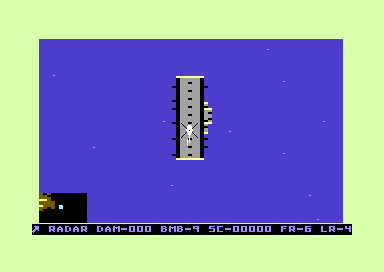
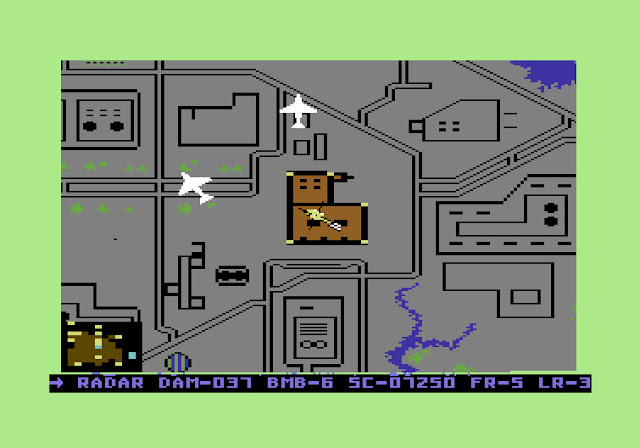
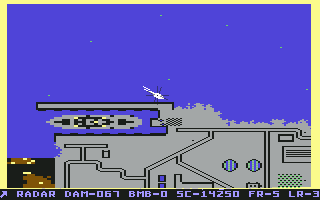
Raid on Bungeling Bay was far more than a helicopter shooter. Beneath the arcade action was a living strategic simulation where enemy factories evolved over time, producing increasingly dangerous defenses if left unchecked.
Core Mechanics
- Dynamic escalation based on player inaction
- Strategic target prioritization
- Persistent enemy infrastructure
- Resource and threat interdependency
- Constant pressure balancing offense vs survival
Influence on My Own Designs
This game demonstrated that enemies could behave like a growing ecosystem instead of static level content. The idea that the battlefield evolves in response to player decisions deeply influenced how I think about escalation systems and emergent pressure mechanics.
My Games
- Bay of Ruin, Overland Brigade: Operation Furnace Breaker! — Web (2026)
- Raid Over Vectrexia! — CGE Vectrex (2020)
- Pocket Raider & Pocket Raider II — GameBoy Advance (2009)
Reference: Wikipedia: Raid on Bungeling Bay
2. Modem Wars (1988)
By Dan Bunten — Commodore 64
Why It Mattered
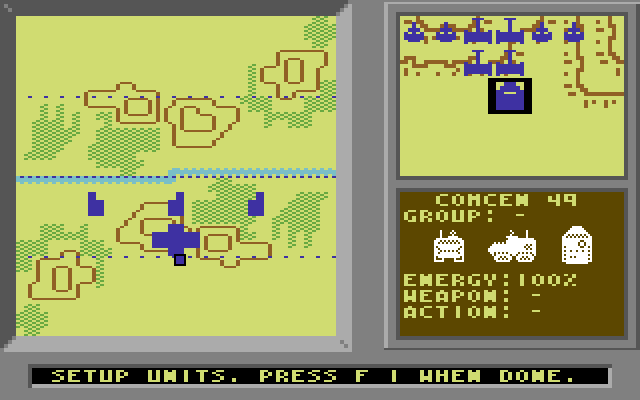
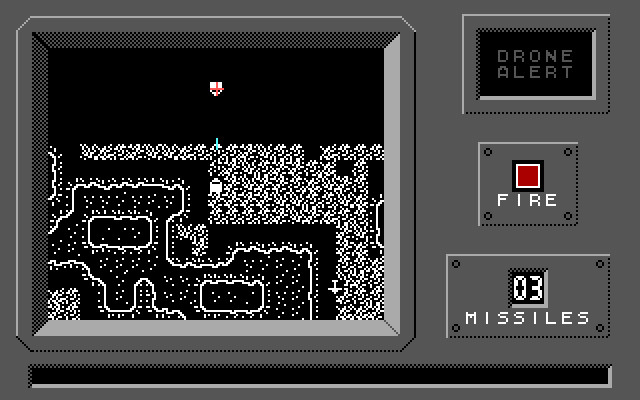
Modem Wars was astonishingly ahead of its time — a real-time tactical warfare game built around modem multiplayer years before online strategy gaming became mainstream. It featured fog of war, terrain advantages, scouting units, artillery positioning, and asymmetric tactical choices.
Core Mechanics
- Real-time tactical warfare
- Fog of war
- Terrain affecting combat effectiveness
- Information warfare and scouting
- Grouped unit command systems
- Multiplayer psychological warfare
Influence on My Own Designs
This game shaped my thinking around:
- Hidden information systems
- Tactical uncertainty
- Player deception
- Asynchronous pressure
- Multiplayer mind games
It also proved that strategy games become dramatically more interesting when players must operate with incomplete information.
My Games
- Tic-Command — Web (2026)
- Tic-Command! — TIC-80 (2019)
- Pocket Commander & Pocket Commander II — GameBoy Advance (2009/2011)
Reference: Wikipedia: Modem Wars
3. War of Nerves! (1979)
Odyssey²
Why It Mattered
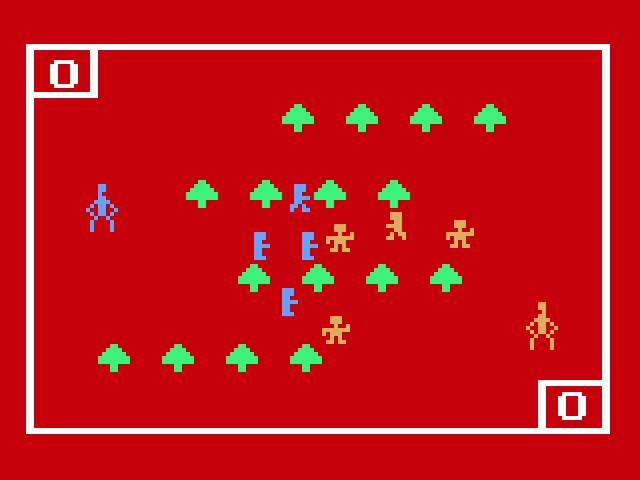
War of Nerves! was an early competitive strategy-action hybrid involving robotic armies and territory pressure. Despite primitive hardware, it created tension through positioning, timing, and vulnerability management.
Core Mechanics
- Area control
- Tactical movement pressure
- Simultaneous threat management
- Vulnerable recovery windows
Influence on My Own Designs
This game strongly influenced my fascination with battlefield chaos and systems where maintaining operational control becomes increasingly difficult under pressure.
My Games
- Orbs of Resonance — Web (2026)
Reference: Historical archive: War of Nerves! Archive Page
4. UFO! (1981)
By Ed Averett — Odyssey²
Why It Mattered
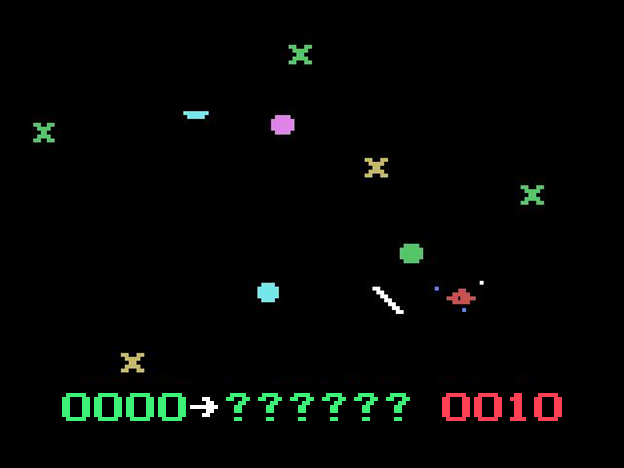
UFO! created intense defensive gameplay using extremely limited visuals and hardware. The game relied on mounting pressure, reaction timing, and threat prioritization.
Core Mechanics
- Escalating attack waves
- Defensive multitasking
- Threat prioritization
- Reflex-driven survival pressure
Influence on My Own Designs
This game reinforced how tension can emerge from simple systems if pressure escalation is tuned correctly.
My Games
- Vectrex UFO — CGE Vectrex (2020)
- UFO — Atari 2600 (2017)
5. Pick Axe Pete! (1982)
By Ed Averett — Odyssey²
Why It Mattered
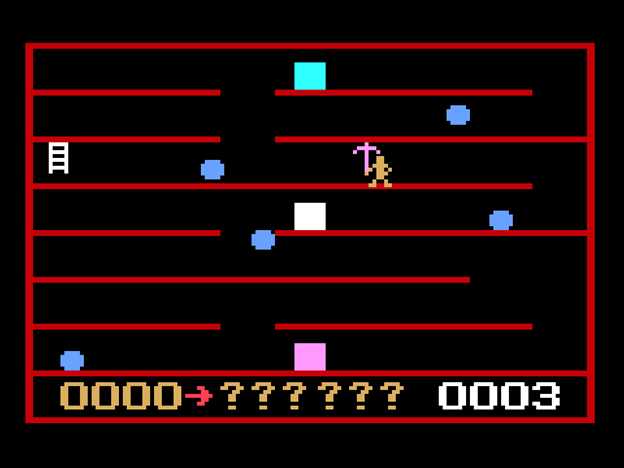
Pick Axe Pete! combined aggressive enemy swarms with destructible environments and spatial navigation challenges.
Core Mechanics
- Destructible terrain
- Crowd pressure
- Spatial routing decisions
- Constant movement optimization
Influence on My Own Designs
This helped shape my interest in environments that actively influence combat flow rather than serving as passive backgrounds.
My Games
- Handy Pick Hank! — CGE Vectrex (2020)
- Handy Pick Hank! — Atari 2600 (2017)
6. Omega (1989)
By Origin Systems — Commodore 64
Why It Mattered
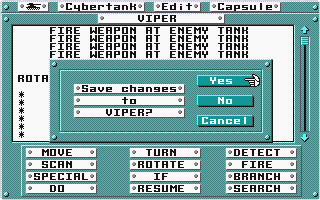
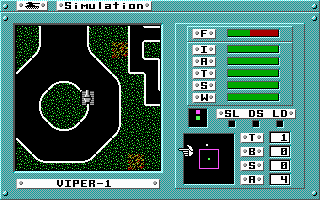
Omega was extraordinarily ahead of its time. Instead of directly controlling a vehicle moment-to-moment, players programmed the behavioral logic of autonomous combat tanks known as Neural Tanks.
The game focused on designing decision-making systems rather than twitch reflexes. Success depended on how effectively your programmed logic responded to changing battlefield conditions.
Core Mechanics
- Programmable AI behavior systems
- Autonomous combat agents
- Conditional decision trees
- Emergent combat outcomes
- Strategic behavioral optimization
- Indirect player control through logic design
Why This Was Revolutionary
Most games of the era tested player reflexes. Omega tested system design.
The player became less of a pilot and more of an AI architect — building behavioral strategies and watching them unfold unpredictably in combat. This created emergent moments where programmed agents behaved in ways even the designer did not fully anticipate.
Influence on My Own Designs
This game had a profound impact on how I think about gameplay systems and artificial intelligence.
It reinforced ideas that would later appear throughout many of my own projects:
- Players designing behaviors instead of issuing direct commands
- Emergent combat interactions
- Autonomous agents operating under imperfect logic
- Strategy arising from system interaction
- Experimentation through iterative AI refinement
The concept of creating intelligent behavior and then observing the consequences felt less like playing a game and more like engineering a living tactical ecosystem.
My Games
- A.I. Wars (the Insect Mind) — Web (2026)
- A.I. Wars (the Insect Mind) — PC (1996–2012)
- A.I. Wars (Armor Commander) — PC (2003)
References:
- MobyGames: Omega (Origin Systems Neural Tank Game)
- Lemon64 Archive
- Various retro computing archives documenting the Neural Tank mechanics
7. Mattel Electronics Dungeons & Dragons (1981)
By Mattel Electronics
Why It Mattered
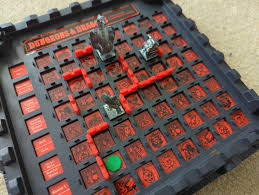
Dungeons & Dragons Computer Labyrinth Game translated dungeon-crawling tension into a compact electronic format focused heavily on imagination and risk management.
Core Mechanics
- Exploration uncertainty
- Audio-driven tension
- Incremental progression
- Survival decision-making
Influence on My Own Designs
It demonstrated that atmosphere and tension can emerge from abstraction and imagination rather than graphical fidelity.
My Games
- Grimlor's Labyrinth — Android (2025)
8. Stratego
By Jumbo Games — originally inspired by earlier European military strategy games
Why It Mattered
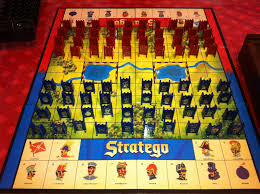
Stratego introduced something that would become deeply influential in both digital strategy games and multiplayer competitive design: hidden information warfare.
Unlike chess, where both players possess complete battlefield knowledge, Stratego forces players to make decisions under uncertainty. Every piece is a potential threat, bluff, trap, or sacrifice.
Victory depends as much on psychology and misinformation as tactical positioning.
Core Mechanics
- Hidden unit identities
- Information asymmetry
- Bluffing and deception
- Reconnaissance and probing attacks
- Risk assessment under uncertainty
- Sacrificial tactical plays
- Defensive trap construction
Why This Was Revolutionary
Stratego transforms uncertainty into a weapon.
A weak piece can become powerful if your opponent believes it is dangerous. Entire battles emerge from misinformation, hesitation, and psychological manipulation.
This creates tension that deterministic strategy games often lack.
Influence on My Own Designs
Stratego strongly reinforced my fascination with:
- Fog-of-war systems
- Hidden state mechanics
- Psychological multiplayer interactions
- Deceptive tactics
- Information control as gameplay
- Emergent player-driven narratives
Many of the multiplayer systems I later became interested in trace directly back to the tension created by incomplete information and uncertainty-driven decision making that Stratego mastered so elegantly.
My Games
- Fortress of Flags — Web (2026)
- Fortress of Flags — PC (2002)
Reference: Wikipedia: Stratego
9. MechWarrior 2: 31st Century Combat
By Activision — DOS PC — 1995
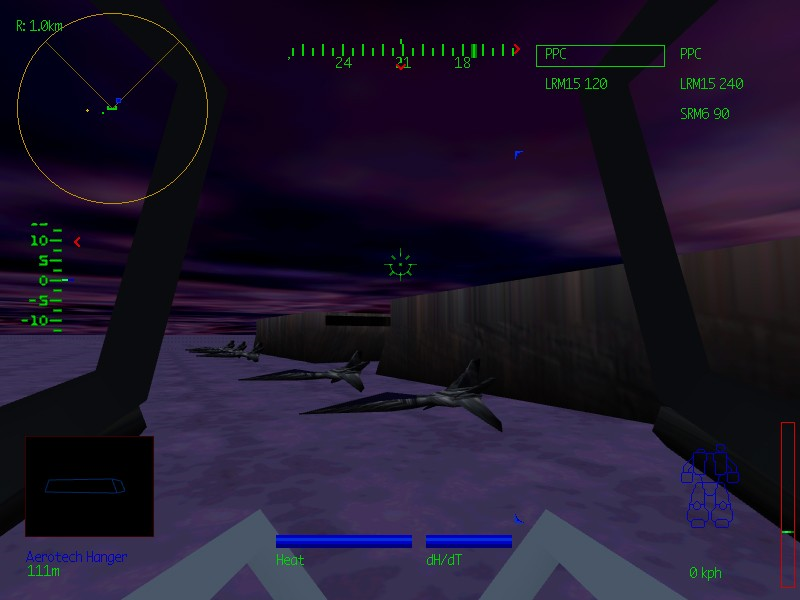
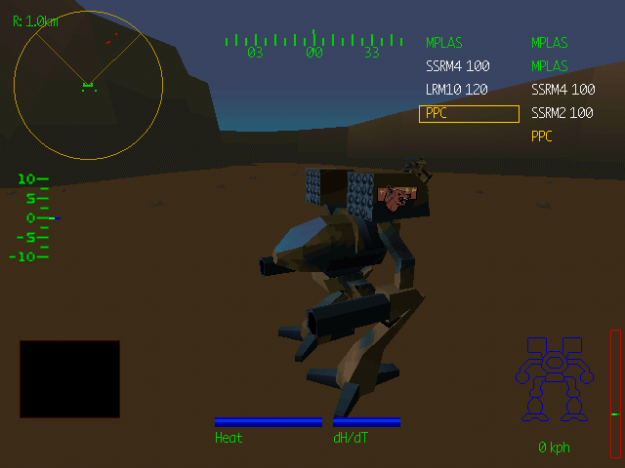
Why It Mattered
MechWarrior 2 achieved something rare for its era: it blended believable simulation systems with fast, intense arcade-style combat in a way that still felt grounded and tactical.
Despite relatively simple polygonal graphics by modern standards, the game created an incredible sense of weight, momentum, heat management, and battlefield presence. Your mech felt like a massive war machine rather than just a floating shooter avatar.
Core Mechanics
- Momentum-based movement and turning
- Heat management systems
- Location-based damage modeling
- Weapon loadout tradeoffs
- Energy/resource balancing during combat
- Terrain-aware tactical positioning
- Radar and target tracking systems
- Distinct mech classes with unique handling characteristics
Why This Was Revolutionary
- The game created immersion through systems rather than graphical fidelity.
- Every decision carried mechanical consequences:
- firing too aggressively risked overheating
- heavier loadouts changed mobility
- torso twisting affected targeting angles
- terrain altered combat advantages
- damage to specific mech sections changed battlefield capability
The result was combat that felt simultaneously tactical, physical, and chaotic.
Influence on My Own Designs
MechWarrior 2 strongly influenced how I think about:
- giving vehicles physical presence and inertia
- balancing realism against gameplay accessibility
- system-driven immersion
- layered combat mechanics
- tactical resource management during action gameplay
- making machines feel mechanically believable without becoming tedious simulations
One of the most important lessons was that simplified graphics could still produce deep immersion if the underlying systems created convincing behavior and meaningful decision-making.
My Games
- Bay of Ruin: Operation Furnace Breaker — Web (2026)
- Hexapod Arena — Web (2026)
Reference
Wikipedia: MechWarrior 2: 31st Century Combat
Looking Back
Looking back, these games shared something important: they trusted the player.
They created systems instead of scripted experiences. They allowed chaos, improvisation, experimentation, and emergent stories.
Many of the modern games I build today still carry DNA from these early pioneers — dynamic escalation from Raid on Bungeling Bay, psychological multiplayer tension from Modem Wars, battlefield pressure from War of Nerves!, and emergent survival systems from the Odyssey² era.


